
Quick Answer: If your hard ceiling is about $700 and you want a UL-listed fat-tire e-bike, the Vivi H7UL is one of the few models that even belongs in the conversation. It is not close to the Aventon Aventure.2 on ride quality, brakes, or long-term support, but it can still make sense for budget-first buyers who value battery safety and compact storage more than refinement.
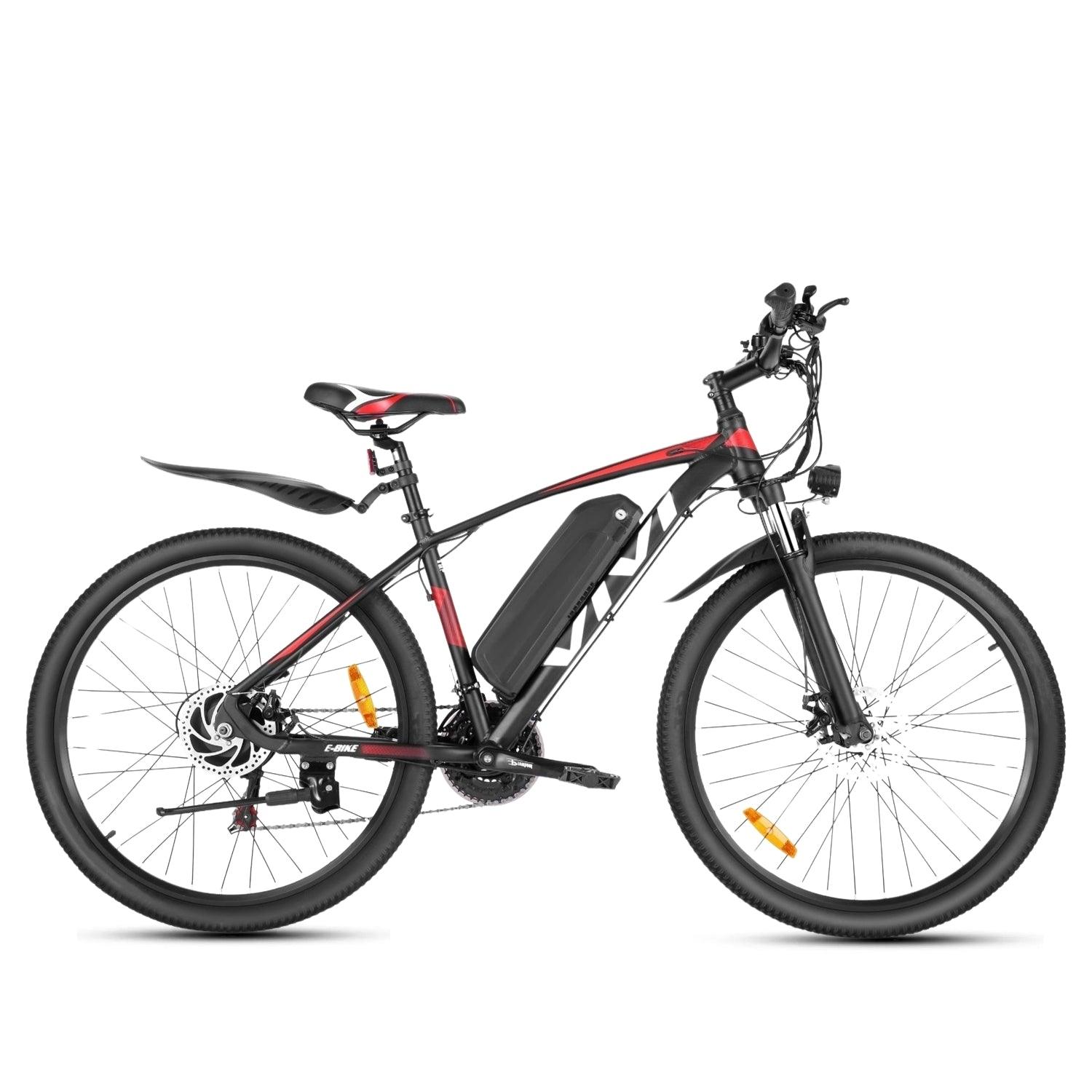
If you're shopping for a fat-tire electric mountain bike and your budget won't stretch past $700, the Vivi H7UL is one of the very few options that carries a UL safety certification at that price point. That alone makes it worth talking about. But let's set expectations from the start: this is a budget bike, and it shows in places. The Aventon Aventure.2 at around $1,799 is the better machine in almost every measurable way. The real question is whether the Vivi H7UL is good enough for riders who simply cannot spend more.
After going through owner reviews on Amazon, digging through Reddit threads on r/ebikes, and watching long-term YouTube owner feedback, this is the practical picture: the Vivi offers a compact footprint, acceptable light-trail performance, and a rare safety badge for the price, but it also asks you to accept a smaller battery, mechanical brakes, cadence-sensor power delivery, and inconsistent support.
Quick Specs Comparison
Before getting into the details, this is how the Vivi H7UL stacks up against two of the most common comparison points in the affordable fat-tire category.
| Spec | Vivi H7UL | Aventon Aventure.2 | Rad Power RadRover 6 Plus |
|---|---|---|---|
| Price | ~$699 | ~$1,799 | ~$1,499 |
| Motor | 500W geared hub | 750W geared hub | 750W geared hub |
| Battery | 48V / 10.4Ah (499.2Wh) | 48V / 14Ah (672Wh) | 48V / 14Ah (672Wh) |
| Claimed Range | 40-50 miles | 60 miles | 45 miles |
| Charging Time | 4-6 hours | ~4.7 hours | ~6 hours |
| Weight | ~55 lbs | 77 lbs | 73 lbs |
| Payload | ~330 lbs | 400 lbs | 275 lbs |
| Tires | 20" x 4.0" fat | 26" x 4.8" fat | 26" x 4.0" fat |
| Display | LCD panel | Color LCD | LCD display |
| Warranty | 1 year | 2 years | 2 years |
| Sensor Type | Cadence sensor | Torque sensor | Cadence sensor |
| Brakes | Mechanical disc | Hydraulic disc | Mechanical disc |
| UL Certification | UL 2849 listed | UL certified | UL certified |
Pricing and availability reflect the draft's April 2026 snapshot and can drift. Always verify current listing details before purchase.
The Vivi costs roughly one-third of the Aventon and less than half of the RadRover. That gap explains most of the compromises: smaller battery, smaller motor, smaller wheels, shorter warranty. But it does win in a few places. At about 55 pounds, it is noticeably lighter, and the compact 20-inch platform is easier to store in small apartments, RVs, or vehicle cargo areas.
Why This Model Stands Out
The Vivi H7UL does not stand out because it is a technology breakthrough. It stands out because it hits a market gap that many established brands avoid: a sub-$700 fat-tire e-bike that at least claims UL 2849 compliance.
The UL Certification Factor
UL 2849 is the safety standard developed for e-bike electrical systems. It covers the battery, charger, controller, and wiring harness for fire risk, electrical faults, and thermal management. That matters because lithium-ion failures are not a theoretical risk. Several US cities pushed hard in 2023 and 2024 to require certified systems, especially after a series of battery fire incidents.
Most UL-certified e-bikes still start much higher than $700. That is why Vivi's claim matters. At the same time, buyers should keep their standards up. Unlike Aventon or Bosch, Vivi is not especially transparent about compliance paperwork, so you should verify the sticker on the battery and ask support for model-specific documentation if anything looks off.
Practical caution: The UL badge is part of the Vivi H7UL's value proposition, but this is still a buy-verify-notice kind of purchase, not a blind-trust purchase.
The 20-Inch Wheel Advantage, and the Trade-Off
The Vivi uses 20-inch wheels, while the Aventon Aventure.2 and RadRover 6 Plus both use 26-inch wheels. That makes the Vivi shorter, more maneuverable, and easier to stash. It also means it does not roll over roots, rocks, and broken pavement as smoothly. The 4-inch fat tires help, but they do not fully erase the harsher feel of the smaller wheel diameter.
What Owners Actually Report
Manufacturer specs only tell part of the story. Owner feedback is more useful here, especially on a budget model where assembly quality, setup friction, and support consistency matter a lot.
What owners like
- Easy assembly: Many owners report going from box to ride in under 30 minutes. The bike arrives mostly assembled and does not demand advanced tools.
- Stronger launch feel than expected: The 500W hub motor feels punchier from a stop than the watt number suggests, partly because the 20-inch wheels help the bike accelerate briskly.
- Good on light off-road surfaces: Packed dirt, gravel, grass, and sand are where the fat tires make the most sense. The bike is more comfortable there than it is on rough technical terrain.
- Compact practicality: For riders without a garage, the smaller footprint is a real daily-life advantage, not just a spec-sheet quirk.
What owners complain about
- Range is optimistic: Real-world use commonly lands closer to 20-35 miles than the upper-end marketing claims, especially with throttle use, hills, or heavier riders.
- The manual and display setup are confusing: Several owners mention poor documentation and a steeper-than-necessary setup curve for assist and limiter settings.
- Customer support is inconsistent: Some riders get parts help quickly through Amazon channels. Others report slow replies or unresolved cases.
- Dead-battery pedaling is still work: Fifty-five pounds is lighter than the big-name fat-tire bikes, but it is still heavy once you are pedaling home without assist.
How It Compares
Vivi H7UL vs Aventon Aventure.2
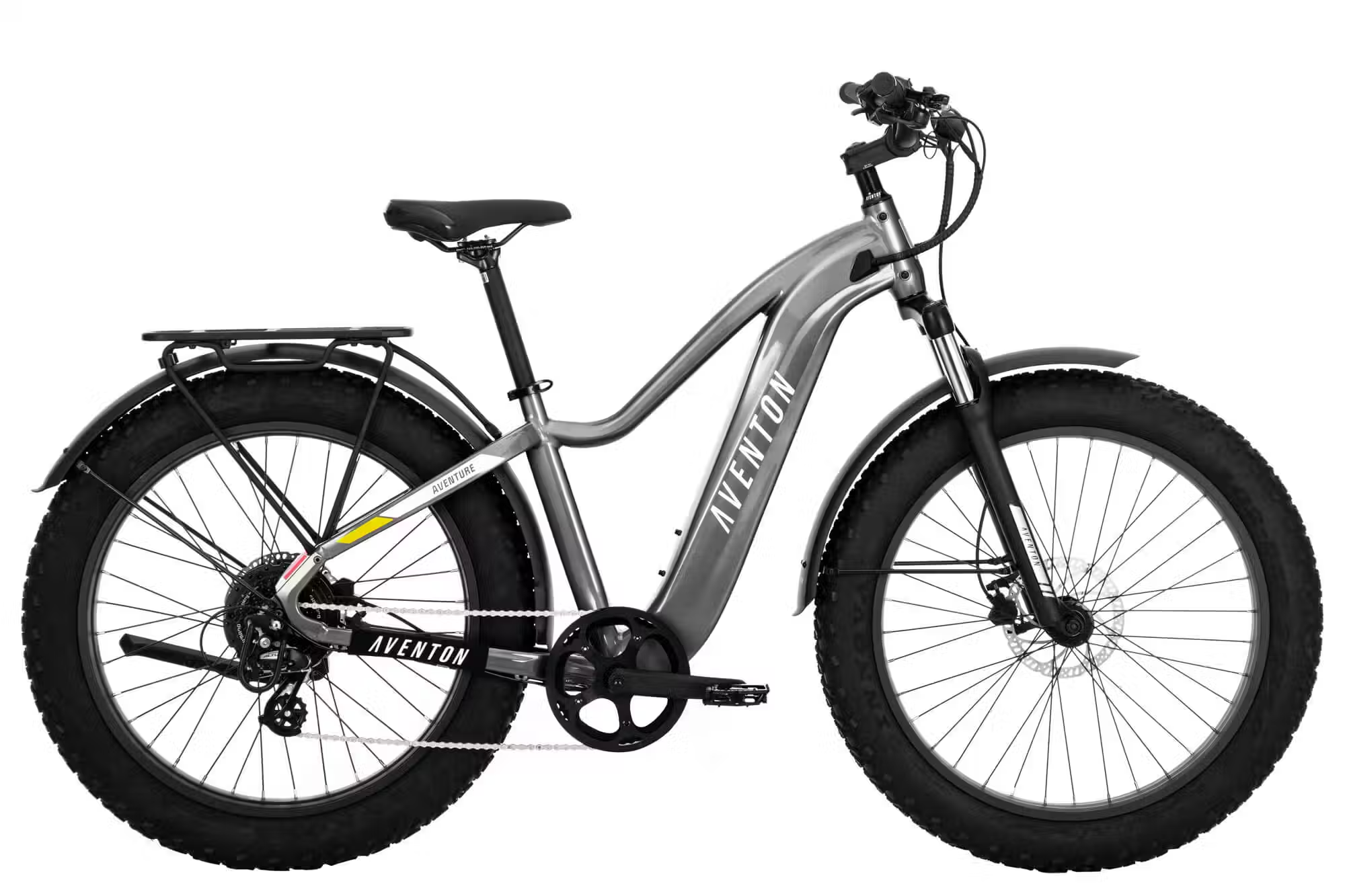
This comparison is almost unfair because the price gap is so large, but it is still the right benchmark. The biggest difference is the ride feel. The Aventon uses a torque sensor, while the Vivi uses a cadence sensor. That means the Aventon responds proportionally to your effort and feels more like an amplified bicycle. The Vivi feels more on-off and less refined at low speed.
The Aventon also pulls ahead on battery size, braking, display quality, overall polish, and support. Its 672Wh battery holds around 35 percent more energy than the Vivi's 499Wh pack. Its hydraulic brakes are meaningfully better. Its warranty is stronger. If you can afford it, the Aventon is the better bike by a wide margin. The Vivi only wins when the budget gap itself becomes the deciding factor.
Vivi H7UL vs Rad Power RadRover 6 Plus
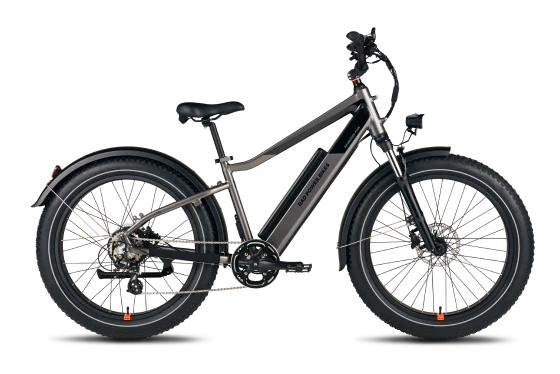
The RadRover 6 Plus is the more interesting comparison because it sits in the middle on price. Its larger 26-inch wheels deliver a smoother ride on rougher terrain, and its 672Wh battery gives it a more comfortable real-world range buffer. More importantly, Rad Power's parts availability and long-term service ecosystem are stronger than Vivi's Amazon-first support model.
The RadRover is not perfect. Phone support has had a mixed reputation for years. But a mediocre support infrastructure is still better than an uncertain one when you need a battery, display, or controller in a few years.
Summary: where each bike wins
| Category | Vivi H7UL | Aventon Aventure.2 | RadRover 6 Plus |
|---|---|---|---|
| Upfront price | Winner | ||
| Weight | Winner | ||
| Storage / transport | Winner | ||
| Motor power | Winner | Winner | |
| Battery capacity | Winner | Winner | |
| Real-world range | Winner | ||
| Ride quality | Winner | ||
| Brakes | Winner | ||
| Display / tech | Winner | ||
| Trail performance | Winner | Winner | |
| Long-term support | Winner | Winner | |
| Warranty | 1 year | Winner | Winner |
| Parts availability | Winner | Winner | |
| UL certification at this price | Winner |
Who Should Buy What
Choose the Vivi H7UL if:
- Your hard budget cap is under $800.
- You need a compact bike that is easier to store than full-size fat-tire models.
- You want UL 2849-listed battery-system safety on a strict budget.
- You are a casual rider, not someone planning daily high-mileage commuting.
Choose the Aventon Aventure.2 if:
- You care most about ride quality and natural pedal assist.
- You need stronger hill climbing and longer range.
- You want hydraulic brakes, better display tech, and a more polished ownership experience.
- You expect to ride often enough that better components will pay you back.
Choose the Rad Power RadRover 6 Plus if:
- You want a middle-ground option between the Vivi and Aventon.
- Long-term parts support matters more to you than absolute lowest upfront price.
- You prefer 26-inch wheels for smoother trail and mixed-surface riding.
- You want an established brand with a longer operating history in the US market.
Understanding the Vivi H7UL's Components
The 500W geared hub motor
Geared hub motors are common in budget and mid-range e-bikes because they are compact, relatively light, and good at low-speed acceleration. The Vivi's 500W rating is modest compared with the 750W setups on the Aventon and RadRover, but it is still adequate for flat terrain and moderate inclines. On steep climbs, the power gap is more obvious.
The 48V / 10.4Ah battery
At 499.2Wh, the Vivi's battery is clearly smaller than the 672Wh packs on the Aventon and RadRover. That is the main reason the real-world range story is less impressive than the listing headline. The removable battery is convenient for apartment charging, but energy capacity is still energy capacity. If you need bigger ride days, this is where you feel the compromise first.
Mechanical disc brakes
Mechanical disc brakes are usable, but they ask more from your hands and require more frequent adjustment than hydraulic systems. On a 55-pound e-bike, that matters. Budget buyers can live with this, but they should not pretend the braking experience is in the same class as mid-range models.
The cadence sensor
The cadence sensor only knows whether the pedals are turning, not how hard you are pushing. That is why the Vivi feels less natural than torque-sensor bikes. Some casual riders will not mind much. Riders who have spent time on better e-bikes usually do mind.
Frequently Asked Questions
Does the Vivi H7UL really have a UL certified battery?
A: It is marketed as UL 2849 compliant, but buyers should still verify the sticker on the battery when the bike arrives and request documentation if anything looks unclear.
Can I ride this in the rain?
A: Light rain is generally fine according to owner reports, but deep puddles, heavy soaking, and pressure washing are still bad ideas on a budget e-bike.
Is the Vivi H7UL good for tall riders?
A: Not always. Riders above about 6 feet often report a cramped cockpit because the 20-inch wheel platform shortens the overall fit.
What is the top speed?
A: Out of the box, the Vivi H7UL is typically limited to 20 mph as a Class 2 e-bike.
How does the warranty work?
A: Vivi lists a 1-year warranty covering manufacturing defects in the frame, motor, battery, and electrical components. In practice, support often routes through Amazon first.
What about maintenance?
A: Expect the usual e-bike basics: weekly tire-pressure checks, periodic brake adjustment, chain lubrication, monthly bolt checks, and sane battery storage habits if the bike will sit unused.