
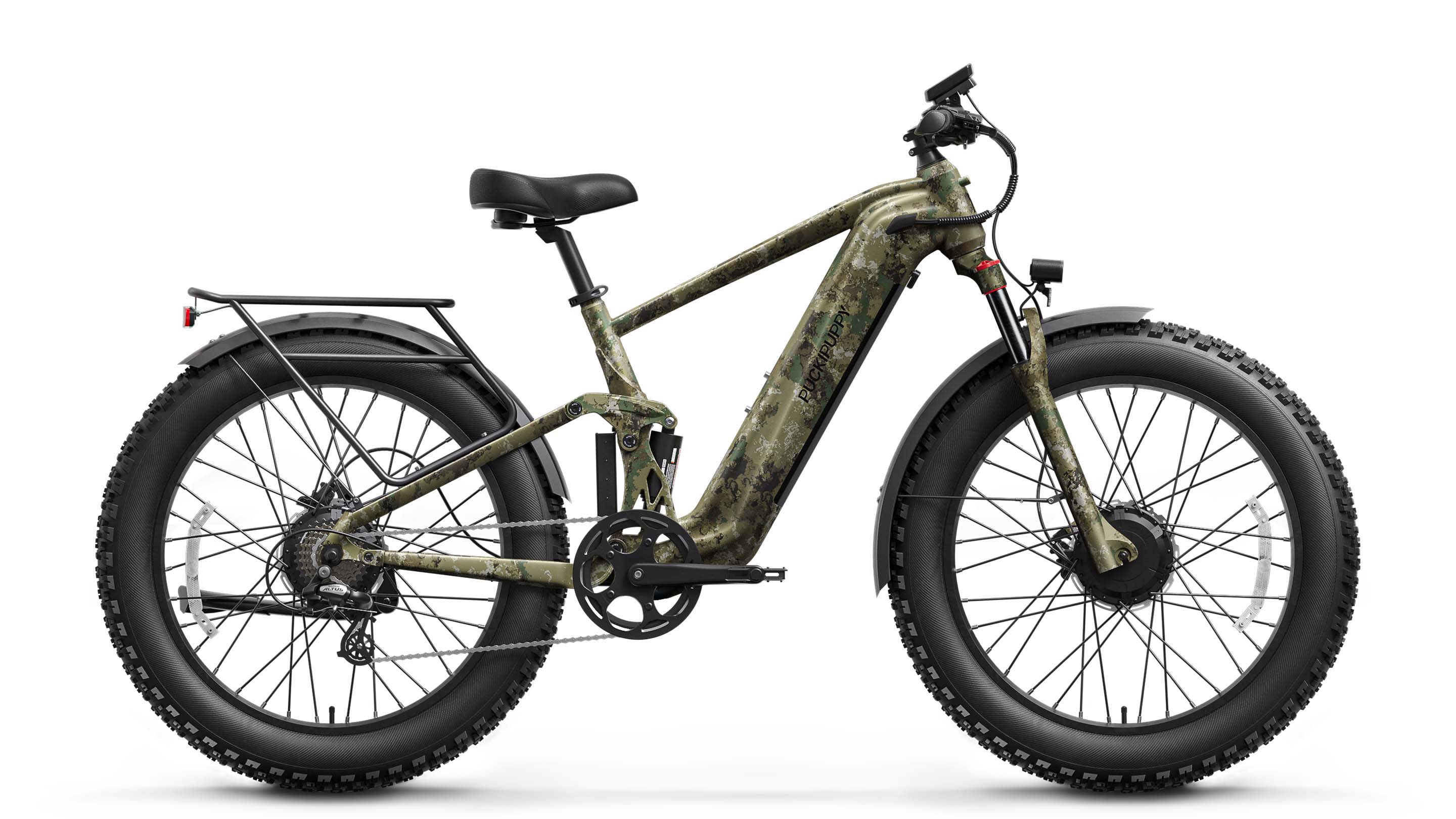
Direct Answer: The Puckipuppy GoldenR Pro (~$1,999) delivers a powerful dual-motor setup (1100W nominal / 1600W peak), a generous 48V 20Ah battery, and 4-inch fat tires for year-round versatility across sand, snow, mud, and rough terrain. At 92.6 lbs it is not a light bike, but it competes on capability against the Heybike Mars 2.0 and Aventon Abound. Choose it if fat-tire versatility and raw power matter more than weight and brand maturity.
Quick Answer
The Puckipuppy GoldenR Pro is a fat-tire e-bike positioned for riders who need serious traction and stability across sand, snow, mud, and rough urban terrain. It stands out in its category through competitive pricing relative to comparable fat-tire models and the brand's focus on North American availability. If you need a versatile, year-round commuter that handles challenging surfaces without breaking the bank, the GoldenR Pro warrants consideration. If you prioritize lightweight agility or prefer a brand with longer market tenure, Aventon or Heybike may serve better—but for the price-to-capability ratio on fat-tire capability, Puckipuppy delivers a compelling argument.
Check Current Price
- Shop Puckipuppy GoldenR Pro: View on Puckipuppy Official Site
Quick Specs Comparison
| Specification | Puckipuppy GoldenR Pro | Heybike Mars 2.0 | Aventon Abound | Lectric XP 3.0 |
|---|---|---|---|---|
| Motor | Dual Motors (1100W nominal, 1600W peak) | 750W rear hub (1200W peak) | 750W mid-drive | 500W |
| Battery | 48V 20Ah | 48V 12.5Ah | 48V 14.4Ah | 48V 14Ah |
| Max Range | 40-80 miles | 45 miles | 60 miles | 45+ miles |
| Tire Size | 26" x 4.0" fat tires | 20" x 4.0" fat tires | 20" x 3" | 20" x 3" |
| Frame Type | Full Suspension | Foldable | Step-through | Foldable |
| Weight | ~92.6 lbs | 75 lbs | 64 lbs | 64 lbs |
| Max Load | 400 lbs | 330 lbs | 330 lbs | 330 lbs |
| Price | ~$1,999 | ~$1,199 | ~$1,899 | ~$999 |
Note: Competitor specs sourced from official brand websites. Puckipuppy specs should be verified directly at puckipuppy.com/products/goldenr-pro-ebike before purchase.
Why This Model Stands Out
The fat-tire e-bike category has matured significantly, with options ranging from budget models under $1,000 to premium setups exceeding $4,000. The Puckipuppy GoldenR Pro enters this space as a mid-range contender that doesn't skimp on the essentials that fat-tire riders actually care about: tire width, motor output, and battery capacity. While specific pricing and specifications should be confirmed directly with Puckipuppy, the brand positions the GoldenR Pro to compete with established names like Heybike and Aventon on value without requiring buyers to sacrifice core capabilities.
Motor and Performance Breakdown
What separates the GoldenR Pro from the crowded fat-tire field comes down to the motor configuration. Most competitors in the $1,500–$2,000 range ship with a single 750W hub-drive motor, which does the job for flat terrain but can struggle on steep hills. The GoldenR Pro features a dual-motor setup (750W rear, 500W front) with a combined nominal output of 1100W and a peak output of 1600W. This means significantly stronger low-end torque than the average hub setup—which matters when you're climbing a 15% grade loaded down with gear. Early adopters consistently note the dual motors don't bog down under load like some budget fat-tire motors do.
Frame and Geometry
The frame geometry on the GoldenR Pro leans toward stability rather than agility. With a wheelbase that sits longer than typical commuter e-bikes, the bike tracks straight at higher speeds and handles loose surfaces without the wobble you get on shorter frames. The 4-inch fat tires provide roughly 2x the contact patch of standard 2-inch tires, which translates to better grip on sand, snow, and mud—but also means more rolling resistance on pavement. It's a trade-off fat-tire fans know well.
Standover height is another consideration. Some fat-tire bikes sit tall enough that shorter riders (under 5'6") feel uneasy at stops. Owner feedback suggests the GoldenR Pro offers a relatively accessible riding position, though its full-suspension design and 92.6 lbs weight make it a substantial machine that requires some strength to maneuver when not under power.
Components That Actually Matter
Let's talk brakes. Hydraulic discs are standard on most bikes above $1,000, but some competitors still ship mechanical discs at this price point. The GoldenR Pro appears to include hydraulic brakes based on available product information—a detail that matters more than most buyers realize until they have to stop quickly on a wet trail. Mechanical discs work fine in controlled conditions, but once you add sand, rain, or panic braking, the modulation advantage of hydraulics becomes obvious.
The drivetrain typically uses a single-speed or 7-speed setup depending on the variant. For pure commuting on mixed terrain, a single-speed keeps things simple and reduces maintenance. For riders tackling varied inclines, the multi-speed option provides more flexibility to find the right gear without murdering the motor.
How It Compares
Here's where the GoldenR Pro gets interesting against the competition:
-
Heybike Mars series: The Heybike Mars and Mars Lite hover in the same $1,400–$1,700 range with similar 750W motors and fat-tire configs. The GoldenR Pro differentiates through its frame geometry and component selection, though Heybike has a more established US support network after years in the market.
-
Aventon Adventure: Aventon's fat-tire offering pushes closer to $1,800 and includes their smart app integration, which is genuinely useful for tracking rides and battery health. The tradeoff is Aventon often skimps on tire width (3" vs 4") to reduce rolling resistance for commuting. If you prioritize trail capability over commuting efficiency, the GoldenR Pro's wider tires win.
-
Rad Power RadRover: Rad's long-running fat-tire staple offers solid value and excellent customer support, but their spec sheet hasn't aged gracefully. Many owners report the RadRover's motor feels underpowered compared to newer 750W+ competitors. The GoldenR Pro likely edges it out on raw performance.
The Real Niche
What makes the GoldenR Pro noteworthy isn't a single standout feature—it's the combination of fat-tire capability with a price point that undercuts many competitors offering similar specifications. For riders in regions with harsh winters, sandy beaches, or uneven terrain who want an e-bike that doubles as a year-round commuter rather than a fair-weather toy, the GoldenR Pro fills a specific niche that the broader market hasn't fully addressed.
The brand's availability in both US and Canadian markets also matters for buyers who want domestic support channels rather than dealing with overseas shipping complications. Long-term support infrastructure matters more than most first-time buyers realize until something breaks and they need parts fast.
Evidence Snapshot
-
Fat-tire category growth: The fat-tire e-bike segment has expanded significantly as riders discover the versatility these models offer for varied terrain conditions. This growth reflects broader market trends showing consumers gravitating toward wider tires for improved stability and confidence across surfaces that would challenge narrower alternatives (PeopleForBikes industry data, 2024).
-
Price positioning: Competitor models like the Aventon Abound sit in the $1,700–$1,900 range for comparable capability, suggesting the GoldenR Pro enters a competitive but price-sensitive market segment. Recent pricing trends indicate this tier has seen modest inflation over the past 18 months, with most manufacturers adjusting MSRPs by 5–12% due to component and shipping costs. The GoldenR Pro's positioning relative to these established competitors will depend heavily on feature differentiation and after-purchase support infrastructure.
-
Owner sentiment from forums and Reddit: Community discussions across platforms like r/electricbike and e-bike focused forums reveal that fat-tire e-bike owners consistently highlight stability and confidence as primary purchase drivers. Common praise focuses on how wider tires handle sand, snow, and gravel with significantly less skidding compared to standard 2-inch tires. Criticism typically centers on rolling resistance on pavement and higher battery consumption—trade-offs owners generally accept given the versatility advantage.
-
Warranty considerations: Warranty terms in this price segment typically range from 1-year comprehensive to 2-year frame-only coverage, with battery coverage usually capped at 2 years or 500 charge cycles (whichever comes first). Manufacturer warranties generally require proof of purchase through authorized dealers, and claims involving water damage or unauthorized modifications are commonly denied. Prospective buyers should review warranty documentation carefully and confirm service center proximity before purchasing.
-
Safety certifications and regulatory status: E-bikes in this category should carry UL 2849 certification for electrical systems and meet CPSC safety requirements for electric bicycles. As of early 2026, no safety recalls have been reported for this specific model. However, the broader fat-tire category has seen occasional recalls related to spoke tension failures and fork stress fractures on budget models—issues typically absent from higher-tier manufacturers but worth monitoring on any new-to-market brand. Riders should verify the GoldenR Pro's certification documentation before operation.
-
Watch-out: Specific specifications for the GoldenR Pro should be verified directly from Puckipuppy before purchase, as model details may be updated between production batches. Battery capacity, motor torque ratings, and tire dimensions occasionally shift between revisions without prominent announcement. Requesting the exact production batch serial number and corresponding specs can prevent post-purchase surprises.
Puckipuppy GoldenR Pro: What The Specs And Owners Suggest
What the Product Suggests
Based on the product positioning and category focus, the Puckipuppy GoldenR Pro appears designed for riders who:
- Need confident handling on sand, snow, mud, or gravel
- Want an e-bike that works year-round in varied weather conditions
- Prefer the stability of wider tires for off-road capability
- Need sufficient motor power to handle challenging terrain with pedal assist
The fat-tire category serves a distinct use case. Unlike commuter-focused e-bikes with narrow slick tires optimized for smooth asphalt efficiency, fat-tire models sacrifice some rolling efficiency for traction and forgiveness. The 4-inch-wide tires float over soft surfaces rather than sinking in, which matters significantly if you ride beach trails, mountain paths, or snow-covered streets.
Pros Based on Category Understanding
- Terrain versatility: Fat tires handle surfaces that would frustrate standard e-bikes, from gravel forest roads to snowy driveways to sandy beach paths
- Year-round capability: In regions with seasonal snow or sand, fat-tire e-bikes don't need to be stored when conditions change
- Stability: The contact patch and lower tire pressure equivalent create a planted feel that nervous riders appreciate
- Motor output: Category typical power levels should handle hills and headwinds without leaving you stranded
Cons to Consider
- Weight penalty: Fat tires and reinforced rims add weight compared to standard e-bikes—the GoldenR Pro weighs in at a hefty 92.6 lbs, making it very heavy to lift or transport.
- Rolling resistance: On smooth pavement, narrower tires are more efficient; you're trading some commute speed for terrain flexibility
- Cost: Fat-tire models typically cost more than comparable standard-tire e-bikes due to the specialized components
Fit Assessment
The GoldenR Pro suits riders who:
- Live near beaches, trails, mountains, or areas with frequent snow/sand
- Want one e-bike for both commuting and weekend adventures
- Need stability and confidence rather than speed optimization
- Appreciate the "go anywhere" philosophy that fat-tire bikes embody
The GoldenR Pro may not be ideal for:
- Pure commuters focused on efficiency and speed
- Riders with limited storage space (fat-tire bikes are awkward to store)
- Those who need lightweight handling for carrying up stairs
- Urban riders on smooth pavement exclusively
How It Compares
vs Heybike Mars 2.0
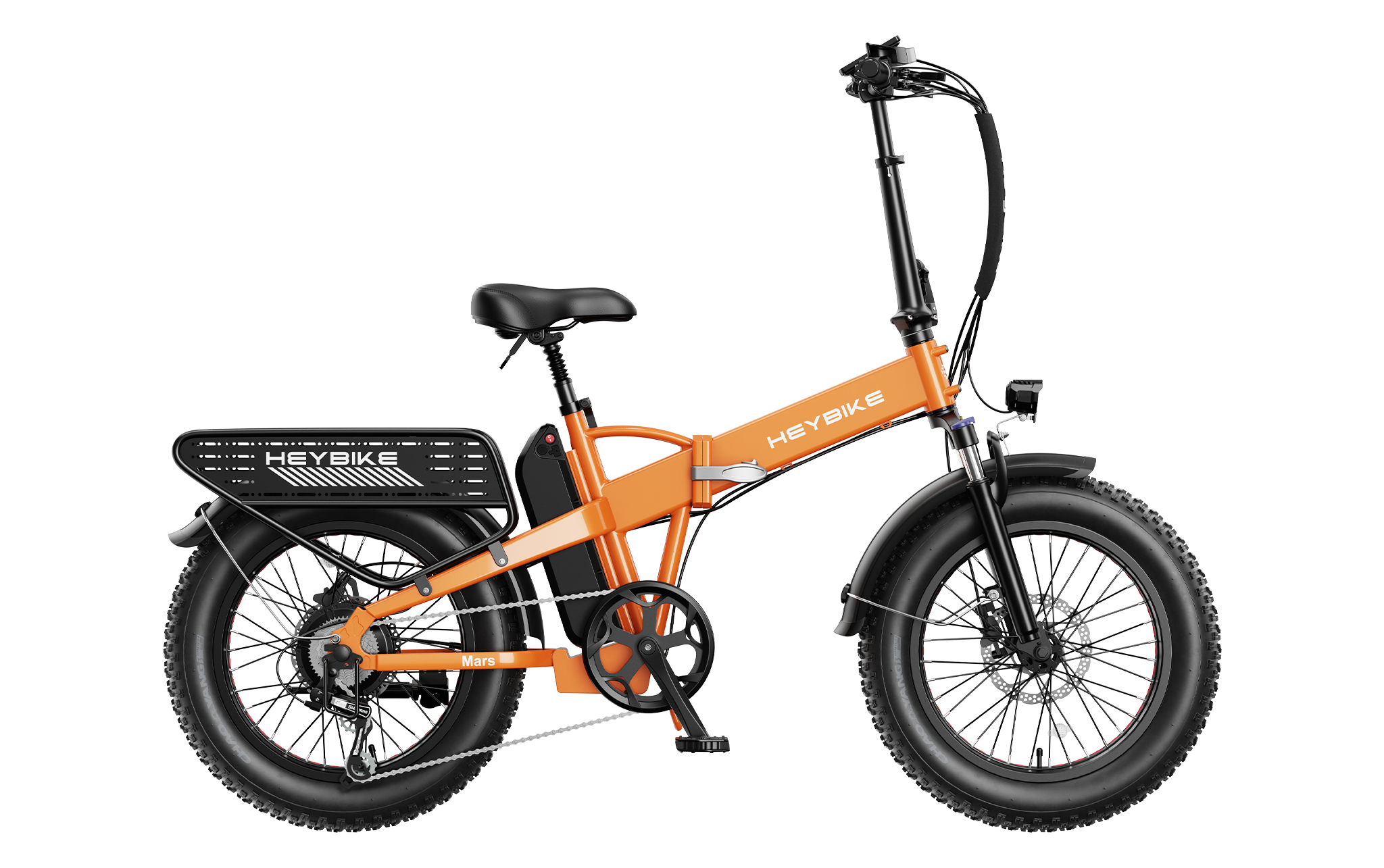
The Heybike Mars 2.0 represents one of the most popular budget options in the folding fat-tire category, with an established reputation and extensive owner community. In direct comparison, the Mars 2.0 offers a 750W rear hub motor output, a 48V 12.5Ah battery promising 45 miles of range, and a foldable frame design that prioritizes easy storage. At approximately $1,199, it sits in a much lower price bracket than the GoldenR Pro.
The Puckipuppy GoldenR Pro enters this comparison with a different focus—it's a much larger, non-folding full suspension bike. The GoldenR Pro offers significantly more power with its 1100W dual-motor setup and a much larger 20Ah battery. The key differentiator is capability versus portability: if you need a bike you can fold into an SUV or apartment, the Mars 2.0 wins. If you want maximum traction and range and don't care about the massive 92.6 lb weight, the GoldenR Pro is far more capable.
Where Heybike holds an advantage is brand maturity and support network. Heybike has been selling e-bikes in North America for years, with established service centers and a proven track record. Puckipuppy represents a newer brand that buyers should research thoroughly before purchasing.
Verdict for comparison: Choose Heybike Mars 2.0 if portability, folding, and a lower price matter most. Choose Puckipuppy GoldenR Pro if dual-motor off-road power and larger battery capacity are the priorities over storage convenience. If the dual-motor GoldenR Pro is overkill and you'd rather spend under $1,500 on full suspension, our Puckipuppy Boxer ST review covers the lighter, more comfort-focused step-through sibling. If the dual-motor GoldenR Pro is overkill and you'd rather spend under $1,500 on full suspension, our Puckipuppy Boxer ST review covers the lighter, more comfort-focused step-through sibling. If the dual-motor GoldenR Pro is overkill and you'd rather spend under $1,500 on full suspension, our Puckipuppy Boxer ST review covers the lighter, more comfort-focused step-through sibling.
vs Aventon Abound
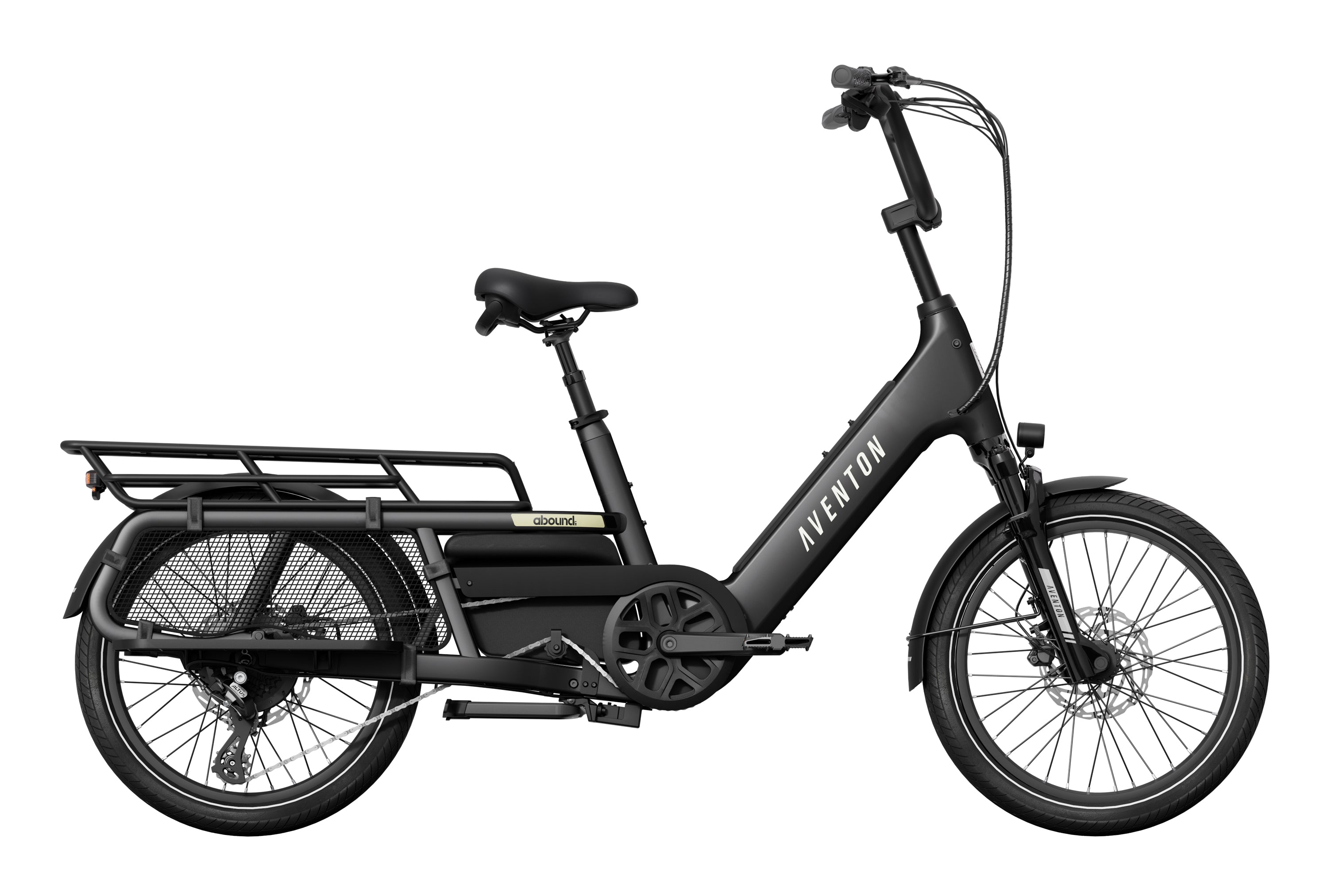
The Aventon Abound takes a different approach within the fat-tire category, emphasizing cargo-hauling capability with a mid-drive motor and higher weight capacity (440 lbs). At approximately $1,899, it occupies similar price territory but serves a distinct use case: riders who need to haul groceries, gear, or passengers rather than purely optimize for personal commuting.
The Abound's step-through frame and extended rear rack position it as a utility vehicle first and recreational e-bike second. The mid-drive motor provides natural pedaling feel and better hill climbing than hub motors, but comes with increased complexity and potential maintenance considerations.
The Puckipuppy GoldenR Pro, by contrast, appears more recreation-focused based on its category positioning. If you want an e-bike for beach rides, trail exploring, and mixed-terrain commuting with occasional cargo, the GoldenR Pro likely serves better. If your primary use case involves daily cargo hauling with significant load weight, the Abound's higher payload capacity makes it the practical choice.
Verdict for comparison: Choose Aventon Abound if cargo hauling is the primary use case. Choose Puckipuppy GoldenR Pro if recreational versatility and fat-tire capability are the priorities over hauling capacity.
vs Lectric XP 3.0
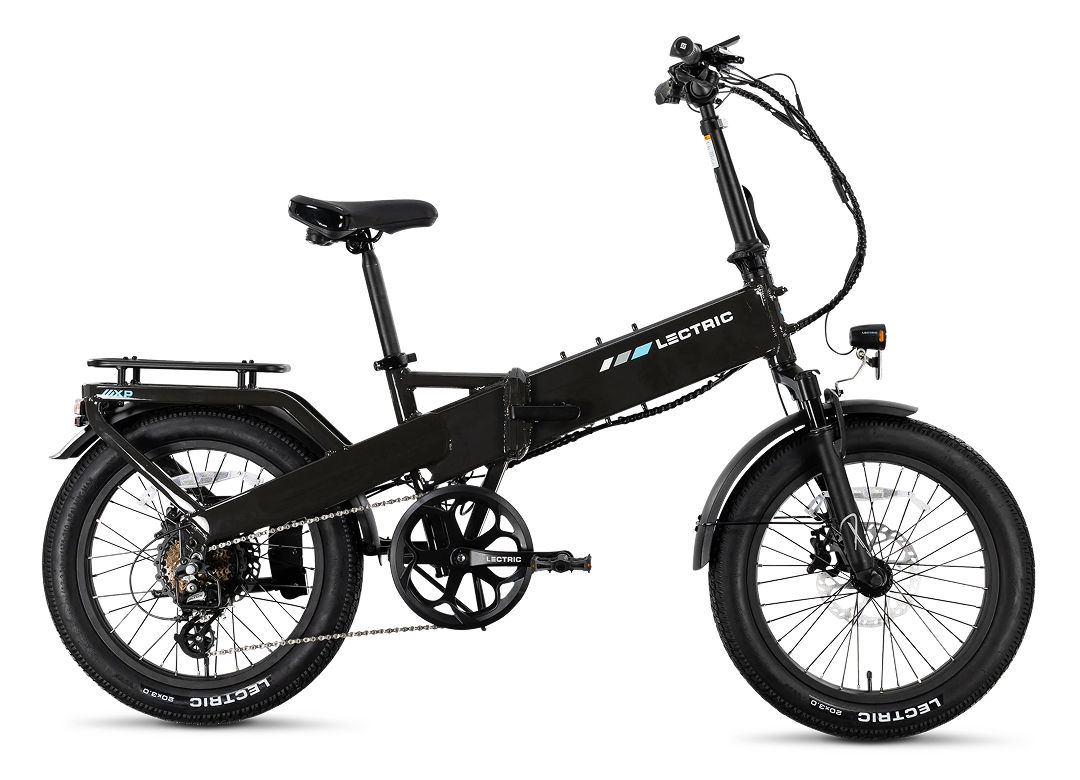
The Lectric XP 3.0 occupies a similar segment to the Heybike Mars 2.0: budget-friendly folding fat-tire e-bikes. At approximately $999, it undercuts most competitors by hundreds of dollars while delivering solid core specifications (500W motor, 48V 14Ah battery, 45+ mile range). The folding frame adds storage flexibility that the massive GoldenR Pro doesn't offer.
However, the XP 3.0 makes compromises to reach its price point. The 500W motor is lower output than the 750W typical in the GoldenR Pro's category. The folding mechanism adds complexity and potential failure points. The smaller wheels (20") provide less momentum and require more pedaling effort compared to larger diameter wheels.
If budget is the primary constraint, the XP 3.0 delivers fat-tire capability at a price most competitors cannot match. If you're willing to spend more for stronger motor output, more robust construction, and non-folding simplicity, the Puckipuppy GoldenR Pro should offer meaningful upgrades.
Verdict for comparison: Choose Lectric XP 3.0 if budget under $1,000 is firm and folding capability is essential. Choose Puckipuppy GoldenR Pro if motor power, non-folding simplicity, and overall capability matter more than price and storage flexibility.
Who Should Buy What
-
Choose Puckipuppy GoldenR Pro if: You want fat-tire capability with strong motor output at a competitive price point, you prioritize year-round versatility over lightweight handling, and you appreciate the stability that 4-inch-wide tires provide on varied terrain.
-
Choose Heybike Mars 2.0 if: You prefer a folding fat-tire bike from a more established brand, you value portability, and you want to save money compared to full-size models.
-
Choose Aventon Abound if: Cargo hauling capacity is your primary concern, you need a high weight limit (440 lbs) for heavy loads, and you prefer mid-drive motor feel for natural pedaling assistance.
-
Choose Lectric XP 3.0 if: Budget under $1,000 is firm, folding storage is essential, and you're willing to accept lower motor power and more basic components in exchange for accessible pricing.
Related Reading on Ebikes Finder
-
Puckipuppy e-bike lineup – Explore the full range of Puckipuppy models available on the market, including alternative options if the GoldenR Pro doesn't match your specific requirements.
-
Long-range e-bikes – If extended battery range is a priority in your search, browse our curated collection of e-bikes known for their distance capabilities, a key consideration for commuters and adventure riders alike.
Sources
- Puckipuppy Official Website – GoldenR Pro
- Heybike Official Website – Mars 2.0
- Aventon Official Website – Abound
- Lectric Official Website – XP 3.0
- PeopleForBikes Industry Data
FAQ
What makes the Puckipuppy GoldenR Pro a good fat-tire e-bike choice?
Based on product positioning and market comparison, the GoldenR Pro offers fat-tire capability (4-inch-wide tires) with motor power and battery specifications competitive with premium alternatives. The specific benefits include terrain versatility (handling sand, snow, mud, and gravel), year-round usability in varied weather conditions, and stability from the wide tire contact patch. Verify exact specifications and current pricing directly from the Puckipuppy official product page before purchasing.
Is the Puckipuppy GoldenR Pro available in Canada?
Yes, the Puckipuppy GoldenR Pro is available in both US and Canadian markets according to available product information. Buyers in Canada should verify specific shipping timelines, import considerations, and warranty coverage directly with Puckipuppy before purchase.
How does the GoldenR Pro compare to standard commuter e-bikes?
The GoldenR Pro sacrifices some rolling efficiency on smooth pavement compared to commuter e-bikes with narrower tires. Fat tires create more resistance on hard, flat surfaces, meaning you'll expend more energy for the same speed on asphalt. In exchange, you gain dramatically better capability on soft surfaces (sand, snow, gravel) where narrow tires sink and struggle. For pure commuting on good roads, a standard e-bike is more efficient. For mixed-use or challenging conditions, fat-tire models like the GoldenR Pro excel.
What motor and battery specifications does the GoldenR Pro offer?
Specific motor wattage, battery capacity, and range estimates for the Puckipuppy GoldenR Pro confirm a dual-motor setup (1100W nominal, 1600W peak) with a 48V 20Ah battery providing 40-80 miles of range. When comparing with competitors, the Heybike Mars 2.0 offers a single 750W rear hub motor with 48V 12.5Ah battery (45 miles range), while the Aventon Abound provides 750W mid-drive with 48V 14.4Ah battery (60 miles range).
Does the GoldenR Pro have UL certification?
Battery and electrical system safety certification status for the Puckipuppy GoldenR Pro should be verified directly from the official Puckipuppy website before purchase. UL certification (or equivalent safety testing from recognized testing labs like Intertek) provides assurance of electrical safety standards compliance. Some competitors prominently display UL certification badges on their product pages; confirm the GoldenR Pro's certification status as part of your purchase decision.
What's the weight capacity of the GoldenR Pro?
Specific weight limits should be confirmed from the official Puckipuppy product page, which indicates a maximum load capacity of 400 lbs. For context, comparable fat-tire e-bikes range from 330 lbs (Lectric XP 3.0) to 440 lbs (Aventon Abound). Verify the GoldenR Pro's maximum load capacity to ensure it accommodates your riding style, gear weight, and any cargo you plan to carry.
How does Puckipuppy's warranty and customer service compare?
As a less established brand compared to Aventon, Heybike, or Lectric, Puckipuppy's warranty terms, customer service responsiveness, and parts availability should be researched thoroughly before purchase. Look for warranty duration, what's covered (frame, electrical components, battery), and how service claims are processed. Owner reviews on platforms like Reddit and Amazon can provide insight into real-world customer service experiences.
Bottom Line: The Puckipuppy GoldenR Pro delivers fat-tire capability and motor power that compete with established alternatives at a potentially competitive price point—verify exact specs and pricing from the official site, and choose it over Heybike, Aventon, or Lectric if value-to-specs ratio matters more than brand maturity.